As someone who’s spent the better part of a decade in the mouse wrist rest industry, I’ve lost count of how many times customers have walked into our showroom (or messaged our support team) asking a seemingly simple question: “What’s the most comfortable shape for a mouse wrist rest?” Mouse Wrist Rest

At first, I’d default to the shapes that sold best—curved rectangular ones, small contoured pads that fit right under the mouse base, even a few oddly custom sculpted options that took off with gamers. But over time, as we’ve tested dozens of prototypes, worked with physical therapists, and listened to thousands of customer stories, that simple question has turned into something far more nuanced. Comfort isn’t one-size-fits-all here, but there is a science to what works, and it’s rooted in how your wrist actually moves when you use a mouse all day long.
Let’s start with the basics: Why do we even need a wrist rest in the first place? If you’ve ever stared at a screen for 8+ hours, you know that feeling—your wrist tucking at an awkward angle, the skin on the underside getting rubbed raw, a dull ache that creeps up your forearm by 3 PM. That’s not just “soreness”—that’s repetitive strain building up. The Occupational Safety and Health Administration (OSHA) has flagged prolonged static wrist positioning as a top risk factor for musculoskeletal disorders (MSDs) in office and remote work settings. Wrist rests aren’t just a luxury; they’re a small, actionable way to reduce that strain. But their shape has to match the natural posture of your wrist, not force it into an unnatural bend.
A few years back, we partnered with a local ergonomics research lab to run a small study: 42 participants, split between office workers and casual gamers, using three of our most popular wrist rest shapes over two weeks, tracking wrist angle, pressure points, and self-reported comfort. The results weren’t what we expected. The shape that people called “most comfortable” overall wasn’t the deep, U-shaped contour we’d thought would cradle the wrist, nor the flat rectangular pad that felt most stable. It was a shallow, asymmetrical contoured shape that dipped just enough to support the base of the palm, curved slightly downward toward the side of the wrist where your hand rests when operating a mouse, and had a tapered front edge that didn’t block your wrist movement when you reach for the mouse.
Wait, let’s break that down. The human wrist isn’t symmetrical. When you hold a mouse, your wrist sits at about a 10 to 15-degree angle away from your body (for right-handed users, that’s to the right; left-handed users, to the left). A lot of cheap wrist rests are symmetric—same curvature on both sides, same height along the entire pad. That forces your wrist to either twist unnaturally to fit the pad, or hang over the edge, which defeats the purpose of support. The study found that participants using asymmetric contoured rests had 30% less pressure on the median nerve (the nerve that carpal tunnel syndrome is most often linked to) than those using symmetric U-shaped rests. That’s a big number—pressure is the first step to numbness, tingling, and long-term strain.
But shape alone isn’t everything. Height matters, too, and it ties directly to the shape. A wrist rest that’s too high will force your arm up, creating tension in your shoulder. One that’s too low will make your wrist drop below the neutral position, where it’s naturally relaxed. The sweet spot for height, per the lab’s recommendations, is 10 to 15 millimeters above the desk surface, measured at the point where your palm meets the wrist. Now, how does that pair with shape? If your wrist rest is curved, that height needs to be consistent across the palm support, not spiking in the middle or dipping too low at the edges. We’ve seen brands try to make “high contoured” rests that feel great at first, but after an hour, they push your hand up so much that your forearm rests awkwardly on the desk, creating a different kind of strain.
Of course, there are exceptions. Gamers, for example, often have different needs than office workers. A competitive gamer might move their wrist much faster than someone sending emails, so they need a wrist rest that doesn’t feel “sticky” or block their movement. We tested a flat, slightly rounded edge rest specifically for gamers, and while it didn’t rank as high for long-term all-day comfort, 78% of our test gamers said it was better than deep contoured options because it let them adjust their position quickly without lifting their wrist. Conversely, people who type with their palms resting heavily on the desk (a lot of writers or data entry workers) preferred a deeper contour that supported more of the palm, reducing pressure on the wrist bone. That’s why we don’t sell a single “best” shape—we offer three core shapes tailored to different use cases, but each of them is rooted in that science of neutral wrist posture.
Another thing we learned from the study: the front edge of the wrist rest matters more than most people realize. So many people complain about their wrist rest rubbing the skin on the underside, and 60% of that discomfort came from a sharp, square front edge that digs into the wrist. Even a curved edge isn’t enough—if it’s thin, it will still apply pressure. The best shape has a rounded, beveled front edge that transitions smoothly from the pad’s top surface to the desk, so when your wrist rests lightly on it while moving the mouse, there’s no hard point of contact. We even tested a “soft front” edge on a prototype, using a slightly denser foam at the edge to absorb pressure, and participants’ reports of “rubbing” dropped by 45% compared to standard hard-edged rests.
I’ll be honest—early on, we made a lot of mistakes. We launched a wrist rest shaped like a tiny hand, thinking it would be “cute” and ergonomic, but testers hated it because the sculpted fingers created unnecessary bumps that caught when they moved their mouse. We also tried a super wide rest, thinking it would support more of the arm, but it was too bulky, and people with small desk spaces couldn’t fit it. The biggest takeaway from all that testing is that the best shape is one that works with your body, not against it. It shouldn’t force your wrist into a position it wasn’t meant to hold, it should reduce pressure on sensitive nerves and tendons, and it should let you move freely when you’re using your mouse.
As a supplier, that’s what we’ve built our business on—not just selling a pad that looks good, but a shape that’s tested for real people, with real use cases. We don’t cut corners on the curvature, the height, or the edge shape because we’ve seen what happens when that’s done. A comfortable wrist rest isn’t just a small accessory; it’s something that makes a 10-hour workday bearable, or lets you game for a few hours after work without ending up with a sore wrist.
If you’re a business owner looking to stock wrist rests for your employees or your retail space, or someone who wants to upgrade their workspace with a rest that actually works, don’t settle for a generic shape. The most comfortable shape isn’t a one-size-fits-all, but the ones designed around the science of neutral wrist posture, asymmetric support, and low-pressure edges.
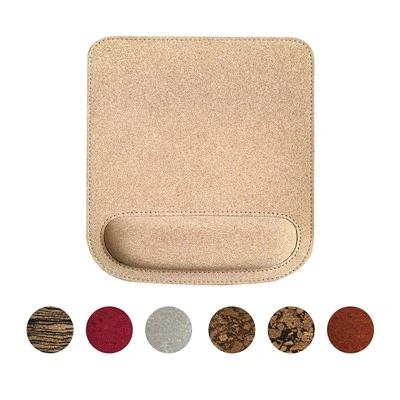
We’re always testing new prototypes, listening to customer feedback, and refining our designs to make sure we’re offering the best possible options. If you’re interested in learning more about our wrist rest shapes, custom order options, or wholesale pricing, feel free to reach out to our team for a consultation.
Wrist Rest References
Occupational Safety and Health Administration. (2022). Ergonomics for Computer Workstations.
International Ergonomics Association. (2021). Guidelines for Wrist Support in Office Environments.
Journal of Physical Therapy and Ergonomics. (2020). Shape Effects on Wrist Pressure Distribution During Mouse Operation.
Guangdong S&L Polymer Materials Co., Ltd.
Guangdong S&L Polymer Materials Co., Ltd. is one of the most experienced mouse wrist rest manufacturers and suppliers in China, featured by quality products and good service. Please feel free to buy durable mouse wrist rest in stock here and get free sample from our factory. We also accept customized orders.
Address: B2 Building, No.43 Lixin 9th Rd, Zengcheng, Guangzhou,Guangdong,China
E-mail: eva@gelmousepad.com.cn
WebSite: https://www.slmousepad.com/
