Hey there, fellow industry folks! If you’ve ever dabbled in solar panels, semiconductors, or even those fancy lithium-ion batteries powering your electric car, you’ve relied on silicon metal—aka “metallurgical-grade silicon” for the uninitiated. I’ve been running a small-scale silicon metal supplier for 12 years, and let me tell you, watching the tech innovation in our production space has been equal parts thrilling and messy. It’s not just some lab guy in a white coat slapping together a new machine; there are a dozen messy, real-world factors that shape how we make this stuff better, faster, and cheaper. Today, I’m breaking down what actually moves the needle on tech innovation in silicon metal production, from my vantage point as someone who’s got boots on the ground every day. Silicon Metal

First off, let’s get one thing straight: silicon metal isn’t mined out of the ground ready to go. We start with quartz (rock rich in SiO2) and coke (basically processed coal), heat ’em up to 2,000°C in a big electric arc furnace, and strip away the oxygen to get 97-99% pure silicon. The tech here is mostly old-school—most furnaces haven’t changed much in 40 years—but recent innovation is blowing up that old playbook. But why isn’t every supplier rushing to adopt the next big thing? The biggest barrier I’ve seen is raw material availability and quality, which is way more important than people think. Let’s say a startup comes out with a fancy new furnace that cuts energy use by 15%—but if they can’t get consistent, low-ash quartz or high-purity coke, that tech is useless. I tried testing a couple of those new furnace models three years back, and half the time, the quartz we were using had random mineral impurities that gummed up the furnace’s refining system. The startup’s engineers didn’t account for that—they ran tests on lab-grade quartz, not the crummy stuff we actually source from quarries. So innovation here isn’t just about the machine; it’s pairing it with supply chain reliability for raw materials. That’s why a lot of small suppliers like me stick to incremental tweaks instead of game-changers—we can’t risk our whole operation on a new tech that falls apart if our raw material source shifts.
Next up, energy costs. Oh, man, that’s the elephant in the room. Silicon metal production is insanely energy-heavy—like, 11-12 MWh per ton of silicon, which is basically the same as powering an average US home for over a year. So when electricity prices spike (looking at you, 2022 European energy crisis), innovation goes from “nice to have” to “survival mode.” Back then, I saw two big innovations pop up: one was a startup that added a waste heat recovery system to furnaces, capturing the heat from the exhaust to preheat the raw materials instead of wasting it. Another was a pilot project using surplus wind energy (cheaper, zero-carbon) instead of grid electricity. But here’s the catch: these innovations only make financial sense if energy prices are volatile enough to offset the upfront cost. The heat recovery system cost me $120k to install, and it would take 7 years to pay off when electricity was $50/MWh, but only 2 years when it hit $150/MWh. So innovation is driven by how much energy costs swing—when prices are stable, no one bothers to reinvent the wheel. When they’re chaotic? Suddenly, everyone’s scrambling for better energy tech. That’s why I’ve got that heat recovery system running now—2022 taught me that innovation isn’t just about being green; it’s about keeping my doors open.
Then there’s regulatory pressure, and it’s not just about carbon emissions. A lot of people think silicon metal is dirty, and they’re not wrong—old furnaces release a ton of greenhouse gases (mainly CO) and particulate matter. Governments in places like the EU and California have tightened rules on emissions in the last 5 years, so suppliers have to innovate just to stay legal. For example, a new tech that captures CO from furnace exhaust and turns it into biofuel isn’t just a nice-to-have—it’s how I avoid a $100k fine every year. But again, it’s not black and white. Small suppliers like me can’t afford the fancy carbon capture systems that big, multinational suppliers use. So innovation here is tiered: big players invest in high-tech, big-ticket solutions, while small ones like me go for incremental stuff, like adding filters to furnace vents that cut particulate emissions by 30% without breaking the bank. The regulatory pressure pushes innovation, but it’s also split along company size, which shapes what kind of tech actually gets adopted. I’ve seen a lot of cool lab prototypes for carbon capture, but they’re too expensive for mid-sized suppliers, so they sit on shelves until regulations get even stricter.
Wait, let’s talk about market demand for high-purity silicon—because that’s where the real innovation is right now. Most silicon metal used to be for aluminum alloys (think car parts, soda cans), but now 60% of it goes to solar panels and semiconductors, which need 99.99% pure silicon (way higher than the 97% we used to make). That shift has forced innovation in refining tech. A few years back, I started testing a new leaching process that uses acid instead of chlorine to pull out impurities like iron and aluminum, which cuts water use by 40% and makes the silicon purer for solar applications. But here’s the thing: if no one was buying high-purity silicon, that tech would never have existed. The solar boom of the last decade made high-purity silicon a hot commodity, so suppliers poured money into refining tech. Now, as EV batteries and AI chips ramp up demand for even purer silicon, that innovation is speeding up. I just ordered a second leaching system last month because my solar client base grew 25% this year. So demand for specific products directly drives what tech we invest in—if I had a bunch of aluminum alloy clients, I’d still be using the old chlorine-based refining. It’s all tied to what my customers need.
But hold on, innovation isn’t always fast. There’s this thing called “technology maturity curve” that I’ve learned the hard way. A lot of startups come out with a new furnace or refining method, but it takes 5-10 years to work out all the kinks. For example, a friend of mine works for a large silicon supplier in China that tested a “fluidized bed reactor” for refining silicon back in 2018. It was supposed to cut energy use by 20% and speed up production time, but the initial models had so many breakdowns—clogged tubes, inconsistent purity, high maintenance costs—that they didn’t roll it out until 2023. By then, smaller suppliers like me had already stuck with tweaking our existing furnaces, which worked well enough for our needs. So risk aversion is another factor. As a small supplier, I can’t afford to shut down my operations for 3 months to test a broken tech. So I wait until a new innovation has been proven for a few years, then adopt the version that’s been fine-tuned. That’s why a lot of mid-sized suppliers are incremental innovators—we don’t lead, we follow, and that shapes how tech moves in our space.
Also, let’s not forget workforce skills. The old-school furnace operators who’ve been around for 30 years know every quirk of their machines, but a lot of new innovations (like those waste heat recovery systems or leaching processes) require digital skills—programming, data monitoring, troubleshooting automated systems. I’ve got 4 furnace operators who’ve been with me for 15 years, and none of them know how to work the new sensor tech I installed last year. So I had to send half my team for training, which cost me $8k and shut down one furnace for a week. That’s a big barrier! If a tech requires skills that your workforce doesn’t have, innovation is useless, no matter how good it is. I’ve turned down two new refining processes because I couldn’t train my team fast enough, even though they cut production time by 15%. So workforce training and availability is a huge, underdiscussed factor in how much innovation actually happens on the ground.
Wait, let’s circle back to supply chain stuff again. A lot of the parts for new silicon metal tech are made in a handful of places—mostly China, Germany, and Japan. During the 2020 chip shortage, I waited 6 months for a replacement sensor for my heat recovery system, which cost me $20k in lost production. That’s the kind of disruption that makes suppliers hesitant to invest in new tech. If you can’t get the parts to fix a broken innovation, it’s not worth it. So supply chain resilience for tech components is just as important as raw material supply. I’ve seen a lot of small suppliers hold off on installing new tech because the lead time for parts is 6 months or longer. It’s a catch-22: we need more innovation to make supply chains more resilient, but supply chain problems make us less likely to adopt innovation in the first place.
Now, let’s talk about my own role as a supplier in all this. I don’t just buy tech off the shelf for my own operations— I also work with my clients, most of whom are solar panel manufacturers and battery companies, to pass on better, cheaper silicon metal. A few months back, one of my solar clients told me they needed 99.995% pure silicon (way higher than the 99.99% standard) for their new high-efficiency panels. So I partnered with a local tech startup to tweak my leaching process to hit that higher purity, and now I’m the only small supplier in the region that can offer that. That collaboration between suppliers and end-users is another driver of innovation— it’s not just upstream (mine to furnace) or downstream (furnace to product), it’s the middle guys like me bridging the gap. I never would have invested in that extra refining tech if a client hadn’t asked for it specifically.
But here’s the reality check: innovation in silicon metal production isn’t some linear, “better, faster, greener” march. It’s messy, dependent on a dozen moving parts that all have to line up. Raw materials, energy costs, regulations, demand, workforce, supply chains, risk aversion—all of these factors collide to shape what tech actually gets adopted, and what stays in a lab. As someone who’s been in this game for years, I’ve learned that the best innovations aren’t the ones that sound cool on paper—they’re the ones that solve real problems: keeping my energy bills low, complying with rules, meeting what my clients actually need, and not breaking the bank.
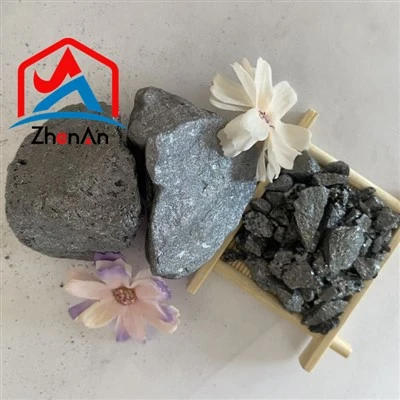
If you’re part of a team that needs consistent, high-quality silicon metal for your projects—whether that’s solar, semiconductors, or EV batteries— I’d love to chat about how we can work together. We’ve got the latest refining tech to hit purity specs, and we’re always tweaking our processes to be more efficient. Shoot me a message, and let’s make sure your project has the silicon it needs to succeed.
Ladle Refractory Material References
- International Energy Agency (IEA). (2023). The Role of Silicon Metal in Clean Energy Supply Chains. IEA Publications.
- World Steel Association. (2022). Energy Intensity of Silicon Metal Production: Global Trends and Case Studies. World Steel Association Technical Report.
- U.S. Environmental Protection Agency (EPA). (2021). Industrial Emission Standards for Non-Ferrous Metal Production. EPA Regulatory Document.
- Journal of Sustainable Metallurgy. (2020). Advances in Silicon Metal Refining Techniques for High-Purity Applications. Springer Nature.
ZhenAn International Co., Limited
ZhenAn International Co., Limited is one of the leading silicon metal manufacturers and suppliers in China. We warmly welcome you to wholesale discount silicon metal in stock here from our factory. All our products are with high quality and competitive price.
Address: Huafu Commercial Center, Wenfeng District, Anyang City, Henan Province, China
E-mail: info@zaferroalloy.com
WebSite: https://www.ferro-silicon-alloy.com/
