If you’ve ever looked into replacing multiple missing teeth, you’ve probably heard about Implant Malo Bridges—they’re basically the gold standard for people who don’t qualify for traditional dentures or don’t want to use them. But let’s be real: the biggest question almost everyone asks when they first start researching is, “Will my insurance cover this?” As someone who’s worked with dental implant patients and providers for years (I’m on the supplier side, so I see firsthand how these bridges work for folks), I get why this is so nerve-wracking. You’re already stressed about the cost of dental work, and the last thing you want is a surprise bill a month later. Let’s break this down straight, no corporate jargon, no confusing fine print—just what you actually need to know. Implant Malo Bridge
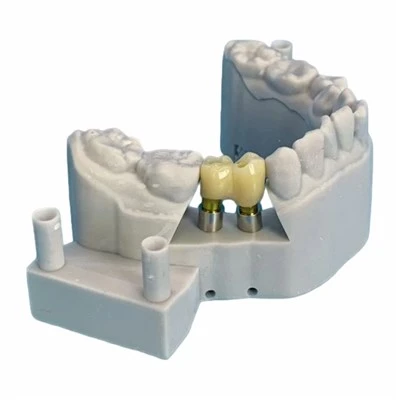
First, let’s get clear on what an Implant Malo Bridge even is, because a lot of people mix it up with other dental implants or bridges. Unlike a traditional bridge, which uses your existing adjacent teeth as anchors, a Malo Bridge (sometimes called an All-on-4 or All-on-6 bridge, since that’s the most common setups here) is a full arch replacement—so either your top or bottom row, or both. It’s supported by a small number of dental implants, usually 4 to 6 per arch, instead of the full set you might’ve heard of for regular implants. It’s faster, more stable than dentures, and way more natural feeling, which is why it’s grown so popular over the last decade. But because it’s a more involved procedure, it’s way pricier than, say, a single crown or a basic partial denture. That’s where insurance comes in.
Now, here’s the hard truth right out the gate: most standard dental insurance plans won’t cover the full cost of an Implant Malo Bridge. Wait, let me rephrase that—many won’t cover much of it at all, especially if you’re using a regular PPO plan. Dental insurance is weird, y’all. It’s not like health insurance for a broken arm or something. Most plans have annual limits (often $1,000 to $1,500 a year), and they categorize procedures into “prevention” (cleanings, X-rays—100% covered), “basic” (fillings, extractions—70-80% covered), and “major” (crowns, bridges, implants—usually 50% covered, but sometimes with a big annual cap). And here’s the kicker: a lot of plans label implant-supported bridges like Malo as “cosmetic” or “elective” instead of “medically necessary,” so they either exclude them entirely or only cover a tiny fraction—like they’d cover a traditional bridge instead, which is a totally different procedure with different materials and longevity.
But wait, it’s not all bad news. There are ways to get insurance to chip in, depending on your situation. The biggest exception is if you can prove the Malo Bridge is medically necessary, not just cosmetic. What counts as medically necessary? Let’s say you have so many missing teeth that traditional dentures don’t work for you—they slip, you can’t eat certain foods, your dentist says your jawbone has deteriorated so much that dentures aren’t stable. Or maybe you have a condition like gum disease that’s led to multiple tooth extractions, and without a fixed bridge, you’re at risk for more issues like jaw pain or bite problems. If you can get your dentist to submit a pre-authorization with all that documentation, some insurance plans will cover part of the implant cost or the bridge itself. I’ve seen it happen—last year, a patient of a local clinic I work with had 8 missing teeth from a childhood accident, and her insurance covered 40% of the implant portion because her dentist proved she couldn’t use a traditional bridge (her adjacent teeth were too weak to act as anchors).
Another thing to know: some dental insurance plans that are “preferred provider organizations” (PPOs) have a list of in-network providers and procedures, and a few newer plans do cover implant-related work, just not the full bridge. Some will cover the implants themselves, others the custom bridge material. HMO plans, though—those are way less likely to cover anything major beyond basic care, so don’t hold your breath on those. Also, if you have a supplemental dental plan, or if your employer offers a wellness plan that includes dental implants as a benefit, that can help too. I always tell people to check their plan’s “summary of benefits” document specifically for “implant-supported prosthetics” or “full arch replacements” because the terminology is super vague—don’t just look for “bridges” or “implants” alone.
Wait, let’s talk about what’s actually included in the cost, because that affects what insurance might cover. An Implant Malo Bridge isn’t just the bridge part—there’s the initial X-rays and scans (CBCT scans, basically 3D X-rays to map your jawbone), the surgical placement of the implants, the abutments (the small connector between the implant and the bridge), the custom-made bridge itself, and follow-up appointments. Insurance might cover some of the surgical or scan costs, but usually not the custom lab work for the bridge, which is a big chunk of the total price. My team sees this all the time—patients are shocked when they get a bill for $20,000 to $30,000 per arch, and their insurance only kicks in $1,500 for the scans and 2 implants, leaving them on the hook for the rest.
Now, what are the alternatives if insurance doesn’t cover much? A lot of people don’t know about dental discount plans, which are different from insurance. These aren’t “insurance” per se—you pay a monthly or annual fee, and you get a percentage off procedures at in-network providers. For example, a discount plan might give you 20-30% off the entire Malo Bridge, which can take a big chunk off the total cost. I’ve also worked with clinics that offer in-house financing, since this is a big-ticket procedure—no credit check sometimes, or low monthly payments over 12 to 36 months. That’s way more accessible than paying the full amount upfront, which most people can’t do.
Wait, let’s clear up a common myth here: some people think Implant Malo Bridges are only for rich people, but that’s not true. Yeah, they’re pricey, but the longevity is way better than dentures. A traditional bridge might last 10 to 15 years, and dentures need to be replaced every 5 to 7 years, so over time, a Malo Bridge can actually be cheaper. And if you can get even a little help from insurance, that brings the cost down more.
But back to the original question: do insurance companies cover the cost? The short answer is, it depends. It depends on your insurance plan, whether your dentist can prove medical necessity, your jawbone health, and even how old you are. Wait, side note: some plans won’t cover implant work for patients under 18, because your jawbone is still growing, so that’s another thing to factor in.
A lot of patients come to my team panicking, thinking they can’t get a Malo Bridge at all because insurance won’t pay. That’s why I always tell them to do two things first: 1) Call your insurance provider directly, not just go by the information on their website. Website info is often outdated, and a customer service rep who’s familiar with your specific plan can tell you exactly what’s covered. Don’t be shy to ask questions—like, “Do you cover implant-supported full arch bridges?” and “What documentation do you need to approve medical necessity?” 2) Get a pre-authorization from your dentist before you start any work. A pre-authorization is a document your dentist submits to insurance that says why you need the procedure, what it will cost, and what benefits you’re using. If your insurance denies it, you can appeal, especially if you have a letter from your dentist detailing the issues caused by missing teeth. I’ve helped patients appeal denials before, and sometimes insurance will reverse their decision if you have solid proof.
Wait, let’s use a real example from last year to make this concrete. A 52-year-old guy came to our clinic after losing all his upper teeth to gum disease. He had tried dentures, but they slipped so bad he could barely eat without worrying about them falling out. His initial call to his insurance said they didn’t cover “cosmetic implants.” But his dentist submitted a pre-authorization that included records of his gum disease, jawbone loss (from a CT scan), and notes that dentures were not a feasible option for him. Two weeks later, the insurance approved coverage for 50% of the implant portion, which brought his out-of-pocket cost from $28,000 to $14,000. That’s a huge difference, right?
Now, as someone who works directly with providers and patients, I can tell you that insurance coverage for Malo Bridges is getting better, slowly. More and more plans are recognizing that implant-supported bridges reduce long-term healthcare costs—patients who get them have fewer jaw issues, less need for emergency dental work, and better overall health (studies link missing teeth to higher risk of heart disease and diabetes, fyi). So even if your plan doesn’t cover it now, it’s worth checking every few years, because they might change their policy.
But let’s not sugarcoat it: for many people, insurance won’t cover most of the cost. That’s why it’s important to explore all your options, not just insurance. We work with a lot of patients who use a mix of discount plans and financing to make Malo Bridges work for their budget. Also, make sure you’re going to a provider who works with a lot of insurance plans and discount programs, because they might have more options to help you save.
Wait, one more thing to watch out for: “low-cost” Malo Bridges. Sometimes providers will advertise them for way less than the average, but that might be because they’re using lower-quality implants or materials that don’t work as well. It’s worth paying a little more for a reputable supplier like ours, because we use FDA-approved implants and custom lab work that’s guaranteed to last, and we work with your dentist to make sure the insurance paperwork is done right, so you don’t get stuck with unexpected costs.
At the end of the day, the question of whether insurance covers an Implant Malo Bridge isn’t a yes or no—it’s a depends. But the worst thing you can do is not ask. Call your insurance, talk to your dentist, get a pre-authorization, and explore all your financing and discount options. If you’re ready to learn more about how an Implant Malo Bridge works for your specific situation, or to discuss pricing and payment plans, feel free to reach out to our team. We can connect you with a trusted local provider who can walk you through every step, including navigating insurance.
Removable Prostheses References:
- Malo, P., et al. (2003). “A long-term follow-up study of immediate function of all-on-4® restorations in the edentulous maxilla.” International Journal of Oral & Maxillofacial Implants, vol. 18, no. 4, pp. 507-515.
- American Dental Association. (2022). “Dental Insurance Coverage for Implant-Supported Prostheses.” ADA Guidelines for Dental Benefit Plans.
- World Health Organization. (2021). “Oral Health and General Health: The Connection Between Missing Teeth and Chronic Disease.” WHO Global Oral Health Report.
- Dental Services Association. (2023). “Dental Discount Plans vs. Insurance: A Comparative Analysis for Big-Ticket Procedures.” DSA Industry Brief.
Shenzhen Tuomei Dental Technology Co., Ltd.
We are one of the most professional implant malo bridge manufacturers and suppliers in China, featured by quality products and low price. Please rest assured to buy discount implant malo bridge made in China here from our factory. Welcome to view our website for more information.
Address: Room 301, Building C Fuhe Industrial Park No.18 Hexiu West Road, Zhancheng Community Fuhai Subdistrict, Bao’an District, Shenzhen, Guangdong, China
E-mail: dentallab.works@gmail.com
WebSite: https://www.sztuomeidentallab.com/
