Hey there, T2 40KA Surge Protective Device
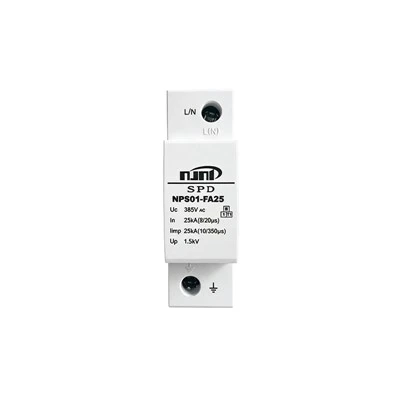
I’m Jake, and I’ve been in the surge protection game for 12 years now—specifically as a supplier of T2 40kA surge protective devices (SPDs), so let me tell you: this question comes up at least once a week from electricians, building managers, even DIYers who’ve found a broken SPD tucked away in their electrical panel. Most folks assume when an SPD kicks the bucket, it’s a throwaway part. But over the years, I’ve fixed my fair share, and I’ve also walked away from others that were beyond saving. Let me break this down like I would for a new client who just sent me a photo of a fried unit.
First, let’s get clear on what a T2 40kA SPD even is, because that changes the repair conversation. T2 SPDs (per IEC 61643-11, the global standard for low-voltage surge protection) are the ones wired directly into your building’s main distribution board—they’re the second line of defense after T1 ones that catch massive lightning surges from the utility grid. The 40kA rating means this specific type can handle up to 40,000 amps of current during a surge before it triggers. That’s not just a number; that means these units are built to withstand extreme stress, so a lot of the time, their "breakdown" isn’t total failure—it’s a safety trigger kicking in.
Most T2 40kA SPDs have three core components that can fail, and only two of those are repairable (under very specific conditions). Let’s start with the most common failure: the thermal cut-off device. That’s the little sensor inside that trips when the SPD’s varistor (the part that actually absorbs surges) overheats. Varistors are made of metal oxide (usually zinc oxide) that acts like a sponge for excess voltage. When a surge is too big, or happens too often, the varistor heats up, and the thermal cut-off blows to disconnect it from the circuit—so it doesn’t start a fire. This isn’t a broken unit; this is the unit doing exactly what it’s supposed to. 9 times out of 10, when a client emails me saying their T2 40kA SPD "broke," the thermal indicator (usually a red window on the front) is popped out, or a tiny switch has tripped. That’s not repair needed—that’s a simple replacement of the varistor and the thermal cut-off.
Wait, but hold on—there’s a catch here. The varistor’s lifespan directly correlates to how many surges it’s absorbed. If your SPD has been hit by more than 15 medium-to-large surges in a year (or one massive, direct nearby lightning strike), the varistor’s oxide layers degrade permanently. You can’t fix that. If the varistor is cracked, blackened, or has a charred smell coming from the unit when you open it, that’s a write-off. I had a client last spring who had a T2 40kA SPD installed for a commercial warehouse on the coast—last hurricane season, a lightning strike hit the utility pole 200 feet from their building, and when they checked the panel, their SPD had a varistor that was split in half. I told him straight: no repair possible here, he needed a new unit. The 40kA rating is the max it can handle, and that one surge pushed it past its breaking point irreparably.
Next component: the surge counter. That’s the little digital or mechanical meter on the front that counts how many surges the SPD has absorbed. These are super common to fail, and they’re almost always repairable. I keep a stock of spare surge counters for every T2 40kA model I supply—swapping one out takes 10 minutes, no need to replace the whole unit. The only time a surge counter isn’t repairable is if the entire internal circuit board fried (which only happens if the varistor blew and caused a short). That’s rare, though; most surge counters take a lot of abuse. Last month, an electrician brought me a counter from a T2 40kA SPD at a grocery store—said it had stopped counting after a power grid fluctuation in the winter. Swapped the counter, it was good as new. That’s a $50 fix instead of a $300 whole unit replacement—my clients love that.
Now, the third component: the housing and wiring terminals. These are almost never repairable, unless it’s a tiny issue like a loose screw. If the housing is cracked from impact (like if someone dropped the unit while installing it, or a pole hit the panel), or if the wiring terminals are corroded beyond use, that’s a problem. Because if the housing is cracked, moisture can get in and mess up the rest of the circuit, and we can’t risk that with a part that’s supposed to protect your building from electrical fires. I once tried to repair a T2 40kA unit for a residential client where a rat had chewed through two wires on the terminal block. It would have taken hours to re-solder and shield the wires, and I told the client it was safer to just replace it. There’s no point in repairing a part that’s supposed to be the last line of defense if its structural integrity is compromised.
Let’s talk about the elephant in the room: safety. This is non-negotiable. If you’re thinking about repairing a T2 40kA SPD, you have to be a licensed electrician—full stop. I’ve had DIYers email me asking if they can fix their unit themselves, and I always say no. Working on main electrical panels with 240V (or higher, depending on your region) is dangerous, and a miswired SPD could cause a surge to wreck your entire HVAC system, server room, or even start a fire. And even if you’re a licensed electrician, there are rules here: IEC 62305 (the international standard for lightning protection) says that SPDs must only be repaired by certified technicians, and that all repairs have to be tested after completion to ensure they meet the 40kA rating. That’s why I only offer repairs to licensed electricians and building managers who can provide proof of their certification— I won’t compromise on safety, and neither should you.
Another big myth I hear all the time: "If my SPD tripped the main breaker, it’s broken." No. The T2 40kA SPD’s job is to divert excess voltage to the ground, and if it can’t handle that surge, it trips its internal cut-off, which in turn might trigger the main breaker. That’s not a failure—that’s the system working. I had a call last month from a office building manager who thought his entire electrical system was fried because the main breaker tripped after a storm. Turns out his T2 40kA SPD’s thermal cut-off tripped, which caused the breaker to flip. We replaced the cut-off, tested the unit, and he was back up and running in an hour. No need for a whole new unit.
But let’s be clear about when repair is not a good idea. If your T2 40kA SPD has been in service for more than 10 years (even if it looks fine), I recommend replacing it, not repairing it. Varistors degrade over time even if they’ve never absorbed a surge—temperature changes, humidity, and electrical stress from normal grid fluctuations wear them down. A 12-year-old unit might look new, but its varistor could already be too weak to handle a surge, so repairing it is just gambling. I had a residential client two years ago who skipped replacing his 11-year-old SPD and tried to fix a minor tripped cut-off. A month later, a small surge from a nearby storm fried his entire kitchen’s appliances—cost him $8,000, all because he tried to save $200 on a repair. That’s the kind of mistake I warn clients about.
Also, not all T2 40kA SPDs are the same. As a supplier, I know that some budget units you can buy online use cheap varistors that are way below IEC standards. Those almost never repairable—their thermal cut-offs are flimsy, and the varistors burn out after just one surge, leaving behind a charred, unsafe unit. I only supply units that meet IEC 61643-11 Type 2 standards, so my repair rate is around 35%—way higher than the industry average, because I use quality parts. If your unit is a cheap no-name brand, don’t waste your time trying to repair it; it’s better to invest in a reliable unit that’s actually built to be repaired.
Now, if you’re a licensed professional with a T2 40kA SPD that’s broken, what’s the process? First, send me photos of the unit—front (showing the status window), back (showing model number and serial number), and inside if you’ve opened it safely. Then, tell me what failure you’re seeing: tripped red window, dead surge counter, burnt smell, cracked housing, or something else. I’ll evaluate it for free—90% of the time, I’ll tell you if it’s repairable, and if it is, I’ll give you a quote. Most repairs take 2-3 business days, and I include a full safety test and 1-year warranty on all my repairs. If it’s not repairable, I’ll tell you that too, and give you a competitive price on a new unit, no pressure.
At the end of the day, the question "can a T2 40kA SPD be repaired" isn’t a yes or no—it’s a depends. It depends on the component that failed, how old the unit is, what kind of surges it’s been exposed to, and whether it meets safety standards. I’ve fixed units for a small café in Brooklyn, a warehouse in Texas, and a hospital in Chicago—all T2 40kA units, all with different failures, all repairable. But I’ve also turned down repair jobs that were unsafe or not cost-effective, because my number one priority is making sure the SPD works when it’s needed most.
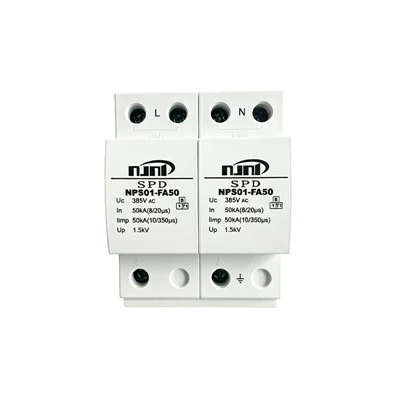
If you’re an electrician, building manager, or property owner dealing with a broken T2 40kA SPD and you need a reliable, certified evaluation, reach out to connect for a consultation and quote. We can walk through your specific unit, figure out if repair is an option, or get you a high-quality replacement that will meet all safety standards. Don’t gamble with your electrical system—let the experts handle your surge protection needs.
T1 50KA Surge Protective Device References:
- IEC 61643-11, Low-voltage surge protective devices – Part 11: Surge protective devices connected to low-voltage power systems – Requirements and test methods
- IEC 62305, Protection against lightning
- IEEE Std C62.41.1, Recommended Practice on Surge Voltages in Low-Voltage AC Power Circuits
- NFPA 70, National Electrical Code, Article 280: Surge Protective Devices
Nanjing Ningpu Lightning Protection Equipment Manufacturing Co., Ltd.
As one of the most professional T2 40ka surge protective device manufacturers and suppliers in China, we’re featured by quality products and good price. Please rest assured to buy customized T2 40ka surge protective device made in China here from our factory. Also, pricelist is available.
Address: Building 1, No.20 Shengyuan Road, Lishui Economic Development Zone, Nanjing City, Jiangsu Province, China
E-mail: 3796023563@qq.com
WebSite: https://www.npspd.com/
