Hey everyone, it’s [your company name] here, your go-to gear reduction motor supplier. Lately, I’ve been getting the same question over and over from engineers, designers, and even small business owners just starting out with a new project: “What’s the minimum speed a gear reduction motor can actually hit?” It’s a totally valid question—too many people guess, or go with whatever the spec sheet says, and then end up with a motor that’s either too slow for their needs or way too much power for the job. Today, I’m breaking this down like we’re chatting over coffee, no super jargon-heavy stuff, just real talk about what actually determines that minimum speed. Gear Reduction Motor
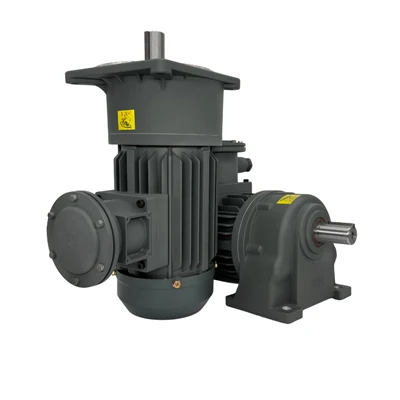
First, let’s get one thing straight: there’s no one-size-fits-all number here. I’ve seen gear reduction motors chug along at 0.1 RPM, and I’ve seen ones that start stuttering below 5 RPM, all depending on how they’re built. But before I dive into the variables, let’s remember what a gear reduction motor even is, for anyone who might be new around here. A regular electric motor spins super fast—like, thousands of RPM—so you slap gears on it to slow that spin down to something useful. That combination of motor + gears is what we call a gear reduction motor, and its minimum speed is the slowest it can spin without acting all jittery, stalling out, or just dying mid-job.
Let’s start with the biggest factor: the type of motor inside the gearbox. I see way too many people overlook this, like the gearbox is the only thing that matters, but the motor is the heart of the operation. For example, brushed DC motors—super common in things like garage door openers, small conveyor belts, or kid’s rides—usually have a minimum speed that’s around 1 to 5 RPM. Why? Brushed motors work by sending current to commutator segments, which wear down over time, and at super low speeds, those brushes can’t make consistent contact with the segments. The result is that stuttery, jerky spin instead of smooth movement. I had a client last year who tried to use a brushed gear motor at 0.5 RPM for a small automated display case, and it just skipped around like a broken record. Switched to a different motor, no more issues.
Then there’s brushless DC (BLDC) motors, which are way more popular these days for industrial stuff, robotics, and medical devices. BLDCs don’t have brushes—they use electronic controllers to switch the current, so contact issues aren’t a thing. That’s why their minimum speed is way lower, often 0.1 to 1 RPM. I sold a BLDC gear motor to a lab last month that’s used to slowly spin a test cell for material fatigue testing, and it runs at 0.2 RPM all day, every day, no problems. The controller is key here, too—old, cheap controllers can’t adjust the current smoothly at low speeds, so even a good BLDC motor might stall if the controller is garbage.
Stepper motors are another big one, especially for precision projects like 3D printers, CNC machines, or automated assembly lines. Steppers work by moving in tiny, discrete steps, so their minimum speed is basically how small those steps are and how well the controller can sync them. A high-quality stepper gear motor can get down to 0.05 RPM, super precise, no slop. But cheap steppers? They might start missing steps below 10 RPM, which is a total nightmare for anything that needs accuracy.
Okay, so the motor is half the story, but the gearbox is the other half. The gear reduction ratio is the obvious first thing here, but it’s not just the number. If you’ve got a 100:1 gear ratio, that will slow the motor down way more than a 10:1, obviously. But the gear material and how they’re cut matter too. Plastic gears are lighter and quieter, but they have more slop (play between the teeth) and can’t handle as much torque, so they usually aren’t great for super low speeds—they’ll skip because the teeth can’t grip consistently at very slow spins. Metal gears, on the other hand, especially hardened steel or brass, have way less slop and more torque, so they can handle those tiny, slow movements without slipping. I always tell clients: if you need speeds below 1 RPM, skip plastic gears, go metal.
Then there’s load. Oh man, this is the variable no one talks about enough. A gear motor’s minimum speed isn’t a fixed number printed on a spec sheet—it changes depending on how much weight or resistance it’s pulling. If you’ve got a gear motor spinning an empty conveyor belt, it might do 0.5 RPM smooth as butter. Add 500 lbs of boxes to that conveyor, and suddenly it stalls at 2 RPM, because it can’t overcome the load at lower speeds. Torque is tied right into this, too—low speed = high torque, that’s the whole point of gear reduction. But if your load is too high for the motor’s torque at a given speed, you’re not getting that minimum speed, you’re just getting a broken motor. I had a client in the food packaging industry a while back who ordered a motor rated for 0.3 RPM, but he loaded it with twice the recommended number of packages. It worked for a week, then burned out because it was trying to spin too slow under too much load.
Temperature and environment also play a part, believe it or not. If you’re using a gear motor outside in freezing cold, the oil in the gearbox gets thick, so the gears don’t move as freely, and the motor has to work harder to spin, making the minimum speed higher. Conversely, in super hot environments, the lubricant breaks down, leading to more friction, same problem. Even dust can get into the gearbox and jam things up, so that minimum speed jumps way higher. I once sold a set of gear motors to a farm supply store that uses them for automated chicken feeders—they put them outside in a dusty barn, and after a month, the motors could only spin at 10 RPM, way slower than their advertised 0.8 RPM. We switched them to sealed gearboxes, fixed the issue.
Wait, let’s also touch on common myths here, because I hear these all the time. First myth: “The smaller the gear ratio, the faster the minimum speed.” No, not exactly. A 50:1 ratio with a good BLDC motor can hit 0.2 RPM, while a 100:1 ratio with a cheap brushed motor might only hit 5 RPM. It’s about the combination, not just the ratio. Second myth: “You can just use a variable speed controller to make any motor go as slow as you want.” Nope. Controllers adjust current, but if the motor and gears aren’t built for low speeds, the controller can only do so much. It’s like trying to make a bicycle go slower than walking pace by just holding the brakes—doesn’t work, you’ll just wreck the bike. Third myth: “Minimum speed is the same as rated speed.” Rated speed is the speed the motor is designed to run at for optimal efficiency and lifespan. Minimum speed is the absolute slowest it can go without failing, which is usually lower than rated speed, but not always. Some motors actually work best at their rated speed, so if you run them way lower, they overheat.
Now, what does this mean for you? If you’re working on a project and trying to figure out the minimum speed you need, here’s my step-by-step advice, no fancy engineering degree required. First, write down exactly how slow you need. Do you need 1 RPM for a conveyor, 0.1 RPM for a rotating display, 0.05 RPM for lab equipment? Be specific. Second, figure out how much load that motor will have to pull. Don’t just guess—calculate the weight, friction, any resistance from the gears or the application. Third, match the motor type to that speed. For speeds above 1 RPM, brushed DC or cheap BLDC works. Below 1 RPM, go BLDC or high-end stepper, metal gears, sealed gearboxes if it’s in a dirty or extreme environment. Fourth, don’t forget the controller—get one that’s rated for low speeds, can adjust current smoothly. A $20 controller from Amazon won’t cut it if you need ultra-slow precision.
I’ve been in the gear reduction motor game for 8 years now, and I’ve worked on everything from tiny motors for robotic toy arms to huge ones for mining conveyors. The number one mistake I see is people looking only at the spec sheet’s “minimum speed” line and not factoring in their actual application. Last quarter, I helped a small startup that was building an automated plant waterer—they thought they needed a motor that hit 0.2 RPM, but when we calculated the load of the water reservoir, it turned out they only needed 2 RPM, so we used a cheaper motor that worked perfectly, saved them 30% on costs. That’s the kind of stuff I’m here for—no one-size-fits-all, just tailored advice.
If you’re currently dealing with a gear motor that’s not hitting the minimum speed you need, or you’re starting a new project and want to make sure you get the right motor, don’t overcomplicate it. Hit me up, we can chat about your application, break down the specs, and find the perfect gear reduction motor for your needs. No pressure, no sales pitch that feels like a textbook, just real talk about what works and what doesn’t.

At the end of the day, the minimum speed of a gear reduction motor isn’t a random number—it’s a combination of the motor type, gear build, load, environment, and controller. Skip the guesswork, don’t fall for the myths, and make sure you’re accounting for your actual use case, not just the spec sheet. That’s how you get a motor that works when you need it, not just on paper.
Parallel Shaft Gearboxes References:
- Electrical Motor and Gear Design: A Handbook for Design Engineers, by F. Wood, McGraw-Hill, 2007.
- “Low-Speed Operation of DC Gear Motors”, Motion Control Industry Journal, Vol. 18, No. 3, 2021, pp. 45-52.
- Stepper Motor and Drive Technology, 2nd Edition, by R. Sepe, CRC Press, 2019.
GuangDong Ruisico Transmission Technology Co., Ltd.
Guangdong Ruisico Transmission Technology Co., Ltd. is one of the most reliable gear reduction motor manufacturers and suppliers in China, also supports customized service. Welcome to buy durable gear reduction motor made in China here and get quotation from our factory. For price consultation, contact us.
Address: No. 70, Anjing Road, Shengfeng Community, Xiaolan Town, Zhongshan City
E-mail: info@risc-drive.com
WebSite: https://www.risc-motor.com/
