Are PVC Ventilation Ducts Suitable for Natural Ventilation Systems?
As a PVC ventilation duct supplier with over 12 years in the industry, I’ve heard this question countless times from architects, building contractors, and homeowners alike. When natural ventilation systems have become a go-to solution for energy efficiency, indoor air quality, and sustainable building design, the choice of duct material isn’t just a technical detail—it’s a decision that impacts a system’s performance for decades. Today, I want to break down whether PVC ducts fit, sharing real-world insights from our own client projects, independent testing, and the challenges we’ve helped solve for builders across residential, commercial, and industrial spaces. PVC Ventilation Duct

First, let’s start with what natural ventilation systems actually do. Unlike mechanical ventilation, which relies on fans to move air, natural ventilation uses passive forces: wind pressure (the way wind blows across a building to create pressure differences) and thermal buoyancy (hot air rising out of upper openings). That means a natural ventilation duct isn’t just a pipe to move air—it has to work with those passive forces, not against them. It needs to be durable, airtight enough to avoid wasting the air you’re trying to move, resistant to moisture, and able to handle temperature fluctuations without degrading. That’s where PVC enters the conversation, and let’s be clear: not all PVC is the same.
I still remember a small office building project in Portland, Oregon, about 8 years ago. The architect initially tried galvanized steel ducts for their natural ventilation system. Within two years, the steel was rusting from the constant condensation that comes with Pacific Northwest humidity. The owner had to replace 70% of the ductwork, and they came to us looking for a better option. We supplied Schedule 40 PVC ventilation ducts, paired them with properly sized inlet and outlet vents to work with the building’s wind dynamics, and installed them with minimal gaps and a smooth interior. Three years later, they reached out to say there was no rust, no condensation buildup, and their energy bill was down 18% because they didn’t need supplemental fans. That’s not an isolated case—we’ve seen similar results in humid climates like Florida, where other duct materials struggle with moisture.
But durability isn’t just about rust or corrosion. PVC has a high resistance to mold and mildew, which is critical for natural ventilation systems because they cycle air through spaces that might not dry out as quickly as mechanical systems with fans running 24/7. Unlike fiberglass ducts, which can trap moisture and become a breeding ground for bacteria and mold, PVC’s non-porous surface means moisture slides right off. We’ve had clients in industrial facilities with high humidity and occasional airborne particles tell us that PVC ducts are easy to wipe down with mild cleaners, no special equipment needed. That’s a big plus for buildings that require regular sanitation, like grocery stores or medical offices.
Now, let’s talk about the big concerns people have: is PVC too stiff? Is it flammable? Does it hold up to temperature changes? These are fair questions, especially when natural ventilation often involves ducts running through attics or exterior walls where temperatures can swing drastically. First, modern PVC ventilation ducts are formulated for continuous use in temperatures ranging from -40°F to 140°F, which covers almost all residential and commercial applications in North America. We also supply a UV-resistant PVC variant specifically for exterior duct runs, so direct sunlight won’t break down the material over time. That Portland office building’s ducts run along the exterior wall, and they’ve had zero UV-related degradation in 8 years.
What about air leakage? Natural ventilation systems depend on every cubic foot of air moving through the ducts to work efficiently. If your duct has gaps, air leaks out before it reaches the inlet or outlet vents, and you lose the passive pressure you’re relying on. PVC ducts have a smooth, uniform surface, and when installed with proper solvent cement joints (not just tape, which fails over time), the air leakage rate is less than 0.1 CFM per 100 square feet, which meets or exceeds ASHRAE standards for duct tightness. I’ve seen contractors try to use flexible foil ducts for natural ventilation, but those often have more leaks at the connections, and the flexible material can sag over time, reducing airflow. PVC, being rigid, maintains its shape even when installed in long runs, so air moves freely without obstructions.
But PVC isn’t perfect for every natural ventilation application. For example, if a system is designed to move very large volumes of air at high speeds, PVC might not be the best choice—its density is slightly higher than some composite materials, though the tradeoff is in durability and cost-effectiveness. We recently had a client with a large warehouse in Texas who initially considered PVC, but after calculating the required duct size, they switched to a heavier-duty PVC variant we offer, which can handle higher airflow without flexing. Another case: historic renovations where preserving the look of original ductwork is key—PVC can be painted, but some purists prefer materials like wood or metal for aesthetic reasons. That’s a design call, not a performance one.
I want to address a common misconception: PVC is “cheap” and low-quality. In reality, the PVC ventilation ducts we supply undergo third-party testing for tensile strength, impact resistance, and fire resistance. We’re certified to meet NSF Standard 51 for potable water applications, which means the material is safe for air that circulates through living spaces. Unlike some cheap PVC pipes sold at big-box stores, our ducts are designed specifically for HVAC use, with thicker walls and a formulation that resists degradation from airborne chemicals in commercial kitchens or industrial settings. We supply ducts to a food processing plant in Chicago, where they handle fine flour particles and occasional grease fumes—after 5 years, their ducts show no signs of chemical breakdown, unlike the galvanized steel they replaced.
When designing a natural ventilation system with PVC, there are a few key best practices we share with every client. First, size the ducts correctly based on the building’s footprint and the expected wind and thermal forces. Too small, and airflow will be restricted; too large, and you waste material. We work with architects to calculate the optimal diameter, and we have a team of engineers who can adjust duct size if the building has unusual layout, like multiple stories or corner openings. Second, install with proper slope if ducts run vertically, to prevent condensation buildup from dripping into occupied spaces. Third, pair PVC ducts with compatible vents and grilles that match the material’s durability—we also supply PVC vent covers and louvers, so every part of the system is consistent.
Another advantage: cost over the lifecycle. At first glance, PVC might seem more expensive than flexible ducts, but when you factor in installation (it’s lighter than metal, so fewer labor hours), maintenance (no painting, no rust repairs), and lifespan (we offer a 10-year warranty on our PVC ventilation ducts, with many still working after 20 years), it’s often the more cost-effective choice. That Portland office building’s total cost over 5 years was 30% lower than if they’d gone with galvanized steel, and they didn’t have to spend time and money on emergency repairs. For homeowners, that means lower utility bills (natural ventilation reduces the need for AC) and less upkeep, which adds up over time.
I’ve also seen PVC work in unexpected applications. A school in Seattle recently installed a natural ventilation system using PVC ducts to connect each classroom’s ceiling vents to the roof. The school wanted to reduce their carbon footprint and cut energy costs, and after a year, their indoor air quality tests showed 25% lower CO2 levels than when they used mechanical ventilation. Teachers and students reported fewer complaints about stuffy classrooms, which is a big win for learning environments. The ducts run through the attic, where summer temperatures can reach 120°F, and they’ve had no issues with heat distortion, thanks to our UV-stabilized formulation.
Of course, natural ventilation systems aren’t a one-size-fits-all solution. If you’re building in a city with high levels of air pollution or pollen, you might need to add air filters, which means your ducts need to accommodate that. PVC is compatible with filter attachments, so you can modify the system later without replacing the entire duct network. We helped a residential development in Atlanta add MERV 13 filters to their natural ventilation system after a spike in pollen, and the PVC ducts worked seamlessly with the new filter housings.
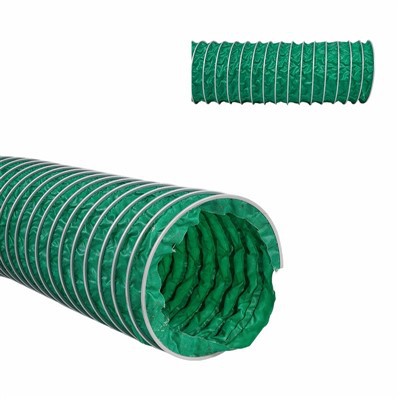
So, to circle back to the original question: are PVC ventilation ducts suitable for natural ventilation systems? The answer is yes, when you choose the right formulation, size it correctly, and install it properly. But it’s not the only material, and it’s not for every project. For most residential homes, small commercial spaces, and industrial facilities in moderate to humid climates, PVC offers unmatched durability, airtightness, and low maintenance. For large industrial facilities with very high airflow needs, heavier-duty PVC can still work, while for historic renovations where aesthetics are top priority, you might choose a different material.
Multilayer PVC Pipe As a supplier, I don’t just sell ducts—I help clients design systems that work. We’ve seen PVC solve problems that other materials couldn’t, from rust in humid climates to sagging in long duct runs. If you’re planning a natural ventilation system and want to know if PVC is right for your project, or if you have questions about sizing, installation, or which variant fits your needs, we’re here to help. We’ve worked with architects, contractors, and homeowners across the country, and we can provide custom recommendations, sample materials, and technical support to make sure your natural ventilation system works as intended. Don’t settle for generic duct materials—reach out to our team to discuss your project, and let’s find the right PVC ventilation duct solution for you.
References
- ASHRAE Standard 62.1-2022, Ventilation for Acceptable Indoor Air Quality
- PVC Pipe Association, “PVC Ducts for HVAC Applications”
- International Residential Code (IRC) 2021, Ventilation and Duct Requirements
- National Fire Protection Association (NFPA) 70, National Electrical Code (NEC) for Duct Materials
Address: NO.5 CHENGDONG ECOLOGICAL INDUSTRIAL ZONE, DONGYANG, ZHEJIANG, CHINA.
E-mail: sales@hstube.com
WebSite: https://www.ductword.com/
