If you’ve ever priced out sheathed wire for a construction job, residential wiring project, or even a small DIY upgrade, you’ve probably noticed a seemingly counterintuitive pattern: a 500-foot spool of 12/2 Romex (a common type of non-metallic sheathed copper wire) doesn’t cost exactly twice as much as a 250-foot spool. As a sheathed wire supplier who’s been fielding these questions from electricians, general contractors, and weekend DIYers for over a decade, I’ve heard every angle. Some folks assume bulk lengths should always offer a straightforward per-foot discount, while others swear shorter lengths come out cheaper overall—but neither is quite the full story. The variation in sheathed wire cost by length isn’t arbitrary; it’s tied to material science, manufacturing logistics, supply chain realities, and small but consistent overhead costs that most end users don’t see. Let’s break it down, starting with the raw materials that make up every foot of sheathed wire, then moving into how length shifts the total and per-foot cost, and finally what that means for your next project. Sheathed Wire
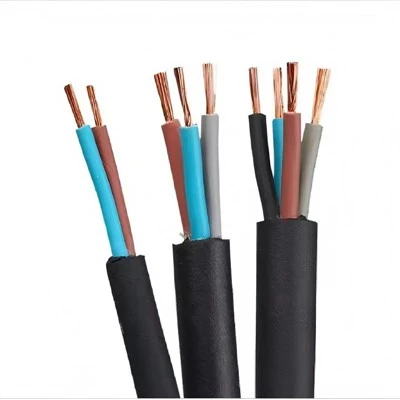
First, let’s get clear on what sheathed wire actually is, because that foundation matters for pricing. Unlike bare copper or individual insulated wires, sheathed wire features one or more conductor cores (almost always copper for residential and commercial use, though aluminum exists for larger runs) encased in a durable, flexible plastic sheath—usually PVC, though cross-linked polyethylene (XLPE) is common for outdoor or high-heat applications. The sheath protects the conductors from abrasion, moisture, and minor physical damage, so it’s a non-negotiable part of the product. That sheath is made of plastic resin, and it’s not a negligible portion of the material cost: for every 100 feet of standard 14/2 sheathed wire, roughly 20 feet of that total length is plastic sheath, with the remaining 80 feet being copper conductor. That ratio is consistent across standard wiring gauges, so material costs scale broadly with total length—but the per-foot rate changes once you account for how manufacturers and suppliers set pricing, and the hidden costs that don’t scale linearly with footage.
Let’s start with raw material pricing, because that’s the biggest driver of sheathed wire costs overall. Copper is a commodity, so its price fluctuates daily based on global mining output, demand from construction and electronics, and even geopolitical events that disrupt shipping. A spool of sheathed wire is just copper wrapped in plastic, so if copper jumps $0.20 per pound, every foot of wire gets more expensive—regardless of length. But here’s where length starts to create variation: a 1000-foot spool of wire requires a continuous conductor, which means fewer splices than two 500-foot spools. Wait, splices? No, for manufacturing, a continuous spool is produced in one single run through the extrusion machine that applies the sheath. If you run a 1000-foot continuous core through the extrusion line, you don’t have to stop, rethread the machine, and prep new conductor for a second run. That machine setup and run prep is a fixed cost, not a per-foot cost. When a manufacturer runs a single 1000-foot spool instead of two 500-foot spools, they eliminate one entire setup, one material waste cut (each run requires a foot or two of scrap at the start and end of the extrusion process), and one batch of plastic that has to be processed. Those savings get passed on to distributors like us, and then to you. For example, when copper was trading at $3.80 per pound in late 2023, our per-foot cost for 12/2 Romex-style wire was $0.178 for a 1000-foot spool, versus $0.185 for a 500-foot spool, and $0.192 for a 250-foot spool. That’s a 3.9% difference between the largest and smallest spool in that example—not huge per foot, but if you’re buying 10,000 feet total, that adds up to $700 in savings by going with ten 1000-foot spools instead of forty 250-foot spools.
But raw materials and manufacturing aren’t the only factors. Shipping and logistics change dramatically with length and spool size, and those costs are often the most noticeable difference for end users. A 250-foot spool of sheathed wire is small enough that it fits on a standard shipping pallet—you can even ship a single 250-foot spool via USPS or UPS for small projects, if needed. A 500-foot spool is a bit heavier (standard 12/2 sheathed wire is about 2 pounds per 100 feet, so a 500-foot spool is 10 pounds) and fits easily on a standard pallet, though it’s bulkier. A 1000-foot spool, though? That’s 20 pounds, and it takes up nearly twice the space of a 500-foot spool. But here’s the catch for logistics: the shipping cost per pound for a full pallet of wire is way lower than shipping individual small spools. When we send a full pallet of 1000-foot spools to a job site, we’re not paying for 10 separate small shipments—we’re paying one flat freight rate for the entire pallet, which gets split across all the spools on it. If you were to buy the same total footage in 250-foot spools, you might need two pallets, or pay for two separate LTL (less-than-truckload) shipments, which adds hundreds of dollars in extra cost. That’s why many electricians will tell you that even if you only need 800 feet of wire, buying a full 1000-foot spool saves them money on shipping and avoids extra trips to the supply house. I’ve had electricians come to me specifically for that reason: they don’t want to run out mid-job, so they get a 1000-foot spool, use what they need, and store the rest for the next project—often turning that storage into a future cost saving too.
Then there’s packaging and handling, which is a fixed cost per spool, not per foot. Every sheathed wire spool gets wrapped in plastic stretch film to protect the sheath during shipping, gets a label with the gauge, voltage rating, and UL listing (a critical safety certification for electrical wire), and gets placed on a pallet for transport. Whether that spool is 250 feet or 1000 feet, the cost of the film, the label, and the labor to handle it is almost the same. Let’s do a quick back-of-the-napkin math on that: if packaging a spool costs $2.50 total, that’s $0.01 per foot for a 250-foot spool, $0.005 per foot for a 500-foot spool, and $0.0025 per foot for a 1000-foot spool. That’s a direct, measurable drop in per-foot cost as length increases. Add that to the manufacturing savings, and you start to see why bulk lengths are cheaper per foot. But wait—there’s a flip side here, right? For really small projects, buying a full large spool might not make sense, and that’s where per-foot costs can actually invert for the smallest lengths. Let’s say you only need 50 feet of wire for a light fixture upgrade. The supply house doesn’t sell you a 50-foot cut piece for $9 (which would be $0.18 per foot, matching the bulk rate)—instead, they’ll sell you a 250-foot spool for $48, which works out to $0.192 per foot. Or worse, some suppliers charge a “cutting fee” for custom lengths, adding $5 to $10 to the total. That’s because the cost of cutting the wire, labeling it as a custom length, and handling the small order is the same whether you take 50 feet or 250 feet, so suppliers pass that fixed cost on. In those cases, going with a slightly larger bulk spool might still be cheaper than buying a custom length, even if you don’t use all the wire.
Another often-overlooked factor is inventory and obsolescence, especially for specialty sheathed wire. Not all wire is standard 12/2 or 14/2 for indoor use. We also carry sheathed wire for outdoor burial (UF-B cable), high-voltage applications, aluminum conductor wire for commercial projects, and even specialty low-voltage sheathed wire for security systems and landscape lighting. For these specialty lengths, the cost per foot can vary more than for standard wire, and not always in the way you’d expect. For example, specialty sheathed wire with a UV-resistant sheath is more expensive to manufacture, so the fixed costs of setup and handling make a larger percentage of the total cost for short lengths. A 500-foot spool of UF-B 10/2 outdoor wire might cost $0.26 per foot, while a 250-foot spool of the same wire costs $0.28 per foot—not a huge difference, but a real one. For a custom length of 100 feet of that same UF-B wire, you might end up paying $0.32 per foot, because the manufacturer has to prep a run of that specialty material, and suppliers don’t want to be stuck with a half-used spool of hard-to-sell specialty wire, so they charge a premium for small custom cuts. That’s a key point for anyone working on a specialized project: always check the cost per foot for different lengths, because specialty wire doesn’t always follow the same bulk discount model as standard indoor sheathed wire.
We also have to talk about quality and safety, because that’s tied to cost too—no one wants to save a few cents per foot on wire that’s not up to code. One of the reasons smaller suppliers or individual sellers online might offer very low per-foot prices for sheathed wire is that they cut corners on the conductor or sheath. For example, a 1000-foot spool of wire that’s labeled 12/2 might only have 14-gauge copper conductor, which is thinner than required, or use PVC sheath that doesn’t meet UL 62 (the safety standard for non-metallic sheathed cable). When you buy from a reputable supplier like us, every spool is tested for conductivity, sheath thickness, and compliance with national electrical codes, and that testing cost is a fixed expense per production run. For a 1000-foot run, the testing cost is spread over 1000 feet, while for a 250-foot run, it’s spread over 250 feet, so that adds a bit more to the per-foot cost of smaller lengths. But that’s a cost worth paying—skipping that testing can lead to electrical fires, code violations, and expensive rewrites down the line, so it’s not something we cut corners on.
Let’s put this all together with a real-world example from our own warehouse, to make it tangible. Last quarter, a general contractor reached out to us needing 8500 feet of standard indoor 14/2 sheathed wire for a 12-unit apartment build. We priced three options for them:
- 8 full 1000-foot spools: Total cost $21,760. That works out to $0.188 per foot, including shipping to the job site.
- 17 half 500-foot spools: Total cost $22,950. That’s $0.201 per foot, a 7.2% increase over the 1000-foot spool option.
- 34 quarter 250-foot spools: Total cost $24,650. That’s $0.218 per foot, a 15.9% increase over the largest spool size.
The contractor went with the 1000-foot spools, and later told us that they also saved time on the job: their electricians didn’t have to stop and switch spools as often, which cut their total labor time by about 2 hours on the job, adding even more value to the bulk length decision. That’s the thing about sheathed wire: the cost difference isn’t just a number on a receipt—it impacts your timeline, your labor costs, and even the quality of the final installation.
Now, for small projects, that bulk discount might not be the best call, and that’s where being smart about length selection matters. If you’re a homeowner re-wiring a single bedroom and only need 150 feet of wire, buying a 250-foot spool for $48 total (instead of a custom 150-foot cut for $36) is a good move—you’ll have 100 feet left for future projects, and you’re still getting a better per-foot rate than a custom cut. If you only need 50 feet, though, it might make sense to check a local supply house for custom cuts, rather than buying an entire spool you’ll never use, just to save a few pennies per foot. The key is to calculate total cost, including any extra fees for small orders, before making a decision.
As a supplier, our job is to make this clear for our customers, whether they’re a big contractor or a DIYer picking up wire for a weekend project. We don’t hide the reason behind the length-based pricing—we explain that bulk lengths are cheaper because we reduce setup, waste, and shipping costs, and that those savings get passed on to you. We also stock a range of lengths, from 50-foot custom cuts for small repairs to 5000-foot bulk spools for large commercial projects, so you can pick exactly what you need without overbuying or paying for more than you require.
If you’re planning a project and want to talk through which length of sheathed wire makes the most sense for your budget and timeline, feel free to reach out to our team for a custom quote. We work with electricians, general contractors, homeowners, and industrial clients across the country, and we can help you compare pricing for different lengths, check for compliance with local codes, and even order specialty sheathed wire for outdoor, high-heat, or low-voltage applications. Don’t let confusing per-foot pricing hold up your project—our team is here to make it simple and straightforward.
Control Cable References
Underwriters Laboratories. (2022). UL 62: Standard for Safety for Non-Metallic-Sheathed Cables. Underwriters Laboratories Inc.
National Electrical Manufacturers Association. (2023). NEMA WC 70: Standard for Copper Conductors and Insulated Wires for Power and Control Cables. National Electrical Manufacturers Association.
U.S. Energy Information Administration. (2024). Copper Prices: Historical and Current Commodity Data. U.S. Department of Energy.
Anhui Huawang Cable Co., Ltd.
As one of the most professional sheathed wire manufacturers and suppliers in China, we also support customized service. If you’re going to buy discount sheathed wire, welcome to get pricelist from our factory. Quality products and reasonable price are available.
Address: No. 32, East Street, Batian Street, Datong Town, Tianchang City, Anhui Province
E-mail: Linda@huawangcable.com
WebSite: https://www.huawang-cable.com/
